Long read
North America: A Continent That Refuses to Sit Still
≈ 8 min read · from desert asphalt to glacier blue
North America is less a place than a dare. It hands you a tank of gas and three time zones and asks what you’re going to do about it. Within a single landmass you can stand in a Yukon valley where the aurora hisses faintly overhead, then a week later sweat through a Oaxacan market where the air is thick with smoked chile and copal. The continent doesn’t do subtle. It does scale.
The Religion of the Road
There is a particular American madness that only reveals itself behind a windshield. The Pacific Coast Highway clings to cliffs above Big Sur like it’s daring the Pacific to take it back, while old Route 66 unspools through ghost towns, neon motels, and diners where the coffee is bottomless and the pie is a moral position. You don’t drive these roads to arrive. You drive them to be slowly emptied of urgency.
Mexico keeps its own version of this ritual, only with tighter switchbacks and roadside shrines marking every curve someone took too fast. Rent the car. Skip the playlist for an hour. The hum of tires on hot asphalt is the real soundtrack of this continent.
The Spine of the World
The Rocky Mountains run like a stitched seam from New Mexico to the Yukon, and somewhere around Banff and Lake Louise they stop being scenery and start being weather. That impossible turquoise in the Canadian lakes is rock flour, glacial dust so fine it hangs in the water and scatters light. Stand on the shore at dawn before the tour buses and you’ll understand why people quit their jobs over a view.
Where the Ground Breathes
Yellowstone sits on a supervolcano, which is the kind of fact you try not to think about while standing over a pool of boiling cobalt water. The geyser basins steam and gurgle and stink of sulphur, and bison wander the roads with the indifference of creatures who know they were here first. Further south, the Grand Canyon does the opposite trick: it makes you feel time instead of heat, a mile of striped rock counting down two billion years while you stand there holding a granola bar.
Cities With a Pulse
New York doesn’t welcome you so much as absorb you, a city running at a frequency that takes about three days to sync into your bloodstream. New Orleans is its swampy, soulful opposite, where a trumpet line drifts out of a Frenchmen Street bar at midnight and somehow everyone on the sidewalk starts moving in time. Mexico City, vast and altitude-thin, balances Aztec ruins against world-class galleries and the best street food on the continent, all of it humming until very, very late.
A Different Relationship With the Dead
Nothing rewires a traveler quite like Día de Muertos in Oaxaca. For two nights the cemeteries fill with candlelight, marigolds, and families picnicking beside the graves of people they loved, telling stories until dawn. It is not morbid; it is the opposite. Pair it with a plate of mole negro built from thirty ingredients and a mezcal that tastes faintly of smoke, and you start to suspect this region understands something about living that the rest of us forgot.
When to Go
Time it to the geography, not the calendar. Hit the desert Southwest and Mexico in spring or autumn to dodge brutal heat; the Canadian Rockies peak from June to September, when trails are clear and lakes are thawed. For the Yukon aurora, surrender to the cold and come between September and March. Hurricane season (roughly August to October) is worth dodging on the Caribbean coast and Gulf — but it’s also when cenote country is greenest and emptiest.
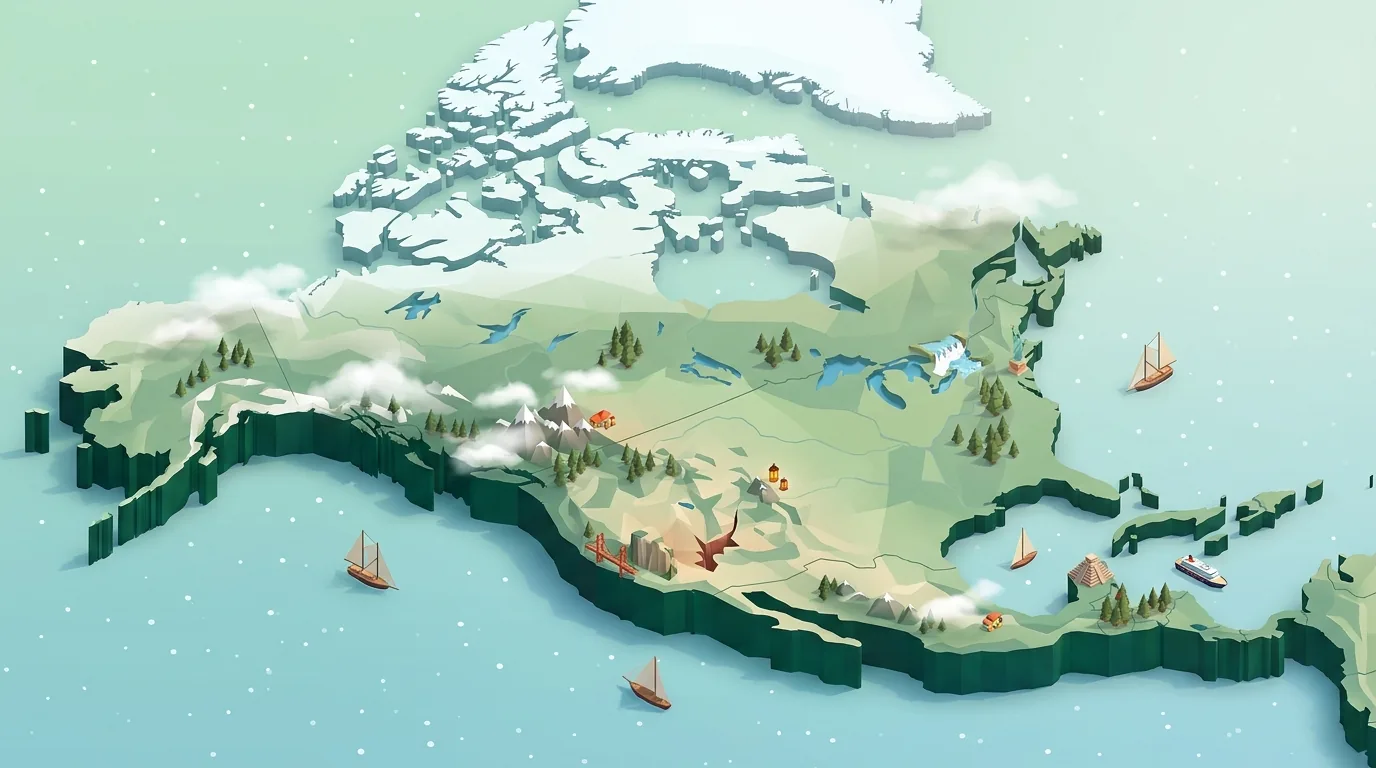
The map above is our pick of places worth the drive. Tap a cell to open details, or hit the list next to the title for every city and sight A–Z, searchable.