Long read
Greenland: An Island Built of Ice and Silence
≈ 6 min read · where the map runs out of roads
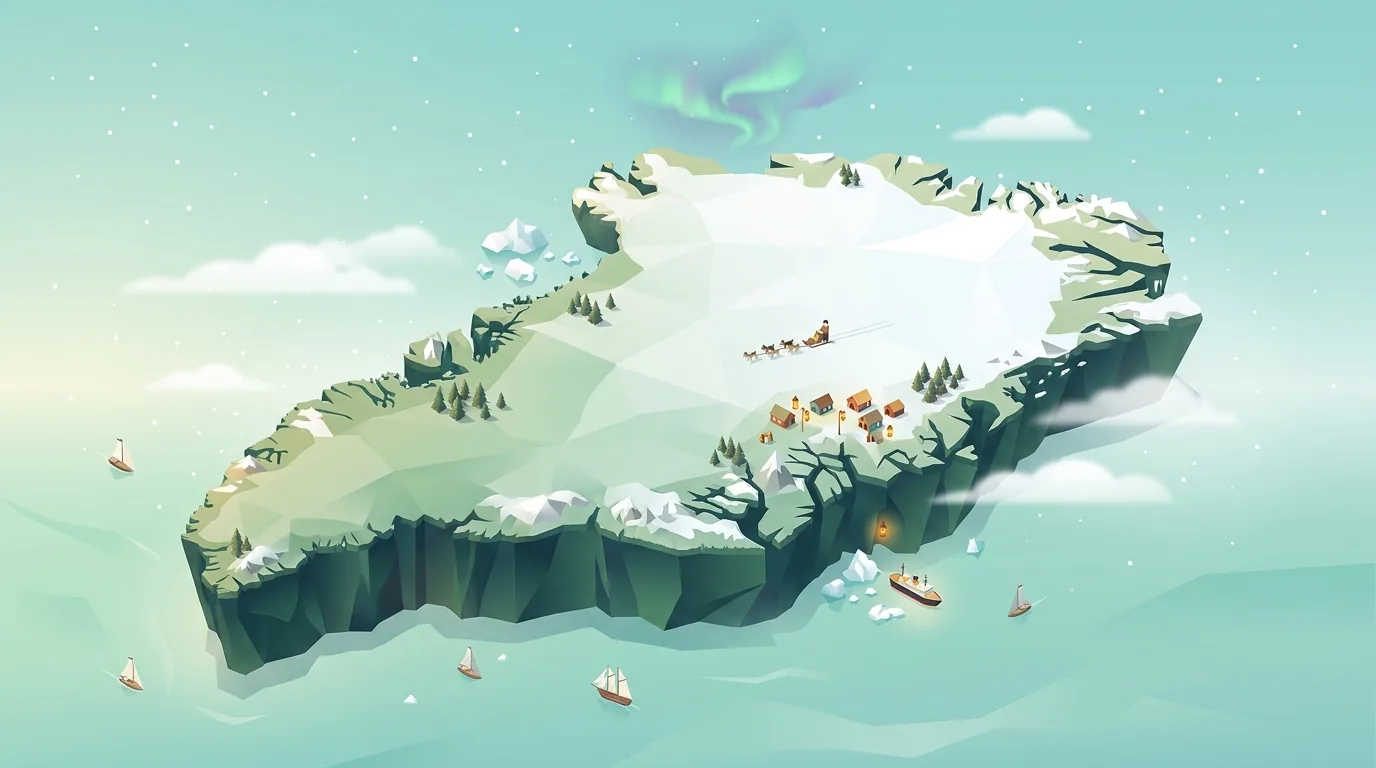
Greenland is the largest island on Earth, and almost none of it belongs to people. Four-fifths of it lies under an ice sheet up to three kilometres thick, a frozen dome so heavy it has pressed the bedrock into a bowl. The rest is a thin rind of rock at the edges, where roughly fifty-six thousand people live in towns you cannot drive between. To travel here is to accept that the land is in charge.
The Factory of Icebergs
At Ilulissat the Sermeq Kujalleq glacier moves faster than almost any glacier on the planet, shedding ice at the rate of a slow river. The bergs it births choke the fjord in a slow-motion traffic jam, blue-white slabs taller than ships, some so large they ground on the seabed and sit for months.
You hear them before the show begins: a crack like a rifle, then a groan that rolls across the water as a wall of ice topples and a wave climbs the far shore. Locals will tell you which floes are safe to approach and which are about to roll. You learn to trust them.
Towns Without Roads Between Them
Greenlandic settlements are scatterings of timber houses in saturated reds, ochres and blues, perched on rock with the fjord at their feet. No road links one to the next; there would be nowhere to build it. People move by boat in summer, by snowmobile or dog sled in winter, and by small plane and helicopter when the weather grants permission.
Light in the Long Dark
For weeks around midwinter the sun never clears the horizon, and the capital, Nuuk, lives in a blue twilight broken only by streetlights and the green fire overhead. The aurora here is not a faint smudge but a moving curtain, folding and snapping in silence, bright enough to throw shadows on the snow.
Trails Cut by Paws
North and east of the Arctic Circle the Greenland sled dog still works for a living, a separate breed kept pure by law. A team in full cry hauls you across frozen fjords and over passes in a clatter of claws and harness, the musher braking with a foot in the snow. It is loud, cold, and faster than you expect, and it is how families have crossed this country for four thousand years.
Whales in the Black Water
In summer the fjords thaw into highways for humpbacks, fins and minke whales that come to gorge on capelin. From a small boat you watch a back the length of the hull rise, exhale a column of mist that smells faintly of the sea floor, and slide under again. In the right week, under the midnight sun, the water is mirror-flat and the only sound for kilometres is breathing.
When to Go
June to August brings the midnight sun, open water, hiking and whales, but also mist and mosquitoes inland. For the aurora and dog sledding, come from late September to April and dress for serious cold. Whatever the season, build slack into your plan: flights and ferries here bow to fog and storm, and a clear day is a gift you do not argue with.
The map above is our pick of places worth the drive. Tap a cell to open details, or hit the list next to the title for every city and sight A–Z, searchable.