Long read
Europe: A Continent You Can Cross by Breakfast
≈ 7 min read · from black-sand falls to lemon-grove coasts
Europe is small in a way that keeps surprising you. Board a train in a grey northern drizzle and step off, three hours later, into a square where the heat smells of espresso and warm stone. The distances are gentle, but the changes are not — language, light, and lunch can all flip between one valley and the next.
The Alps, Standing in the Middle of Everything
The Alps are the continent’s spine, and almost everything bends around them. From the Bavarian foothills to the lakes of northern Italy, you climb through pine and cowbells into a thinner, brighter air where the snow holds on into July.
What stays with you is the scale of the quiet. A cable car lifts you above the tree line and the towns shrink to roof tiles, the passes thread away in every direction, and you understand why people have been crossing these mountains, on foot and by rail, for two thousand years.
The Mediterranean, Where the Map Goes Soft
Down on the Mediterranean the day slows to the pace of the heat. On the Amalfi Coast the road clings to cliffs above water the colour of bottle glass; in Andalusia the white villages hold their breath through the afternoon, then spill out into the streets once the sun lets go. You eat late, you walk it off, and nobody is in a hurry.
Old Towns and the Long Habit of Sitting Outside
Every European town worth its salt has a square, and every square has its café culture — chairs angled toward the light, a single coffee bought as rent for an hour of watching. From a Parisian terrace to a Lisbon esquina, the ritual is the same: order little, stay long, let the city move past you.
Trains That Stitch the Whole Thing Together
The reason it all feels close is the railway. High-speed lines stitch capital to capital — breakfast in France, a museum in Germany, dinner where the menus turn to Italian. You watch borders pass as a change in the signage and the field crops, never as a wall, and a continent of forty-odd countries starts to feel like one well-connected neighbourhood.
Iceland and the Wild North
Then the north reminds you how raw Europe can still be. Iceland’s waterfalls fall in slabs you can feel in your chest, the ground steams, and on a clear winter night the northern lights unroll in green ribbons over the lava. Further south, the Scottish Highlands keep the same lonely grandeur — wet, enormous, and almost empty.
When to Go
Aim for the shoulder seasons. Late May and September give you warm Mediterranean afternoons without the August crush, Alpine trails clear of snow, and northern light that lasts half the night. For the aurora, flip the calendar: go to Iceland or the Highlands between October and March, and give yourself enough nights to outwait the clouds.
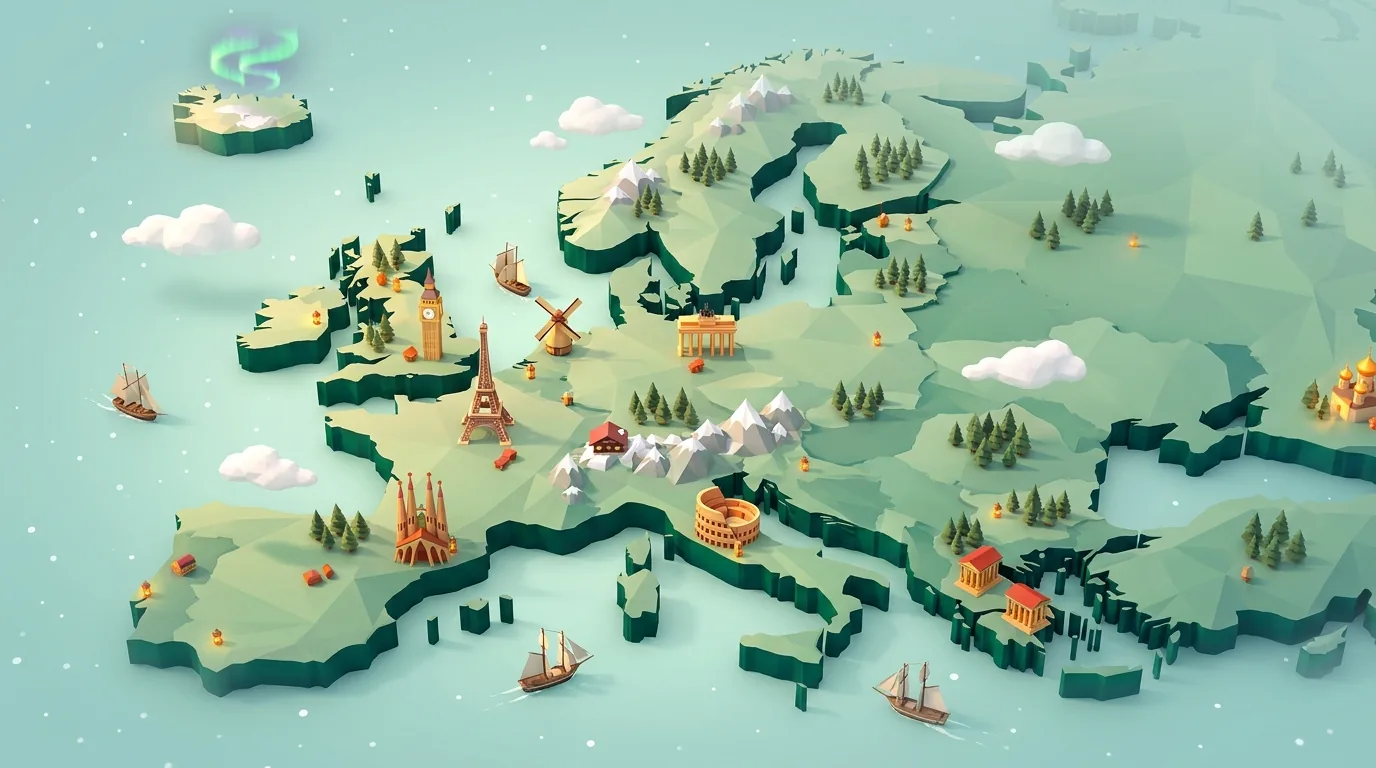
The map above is our pick of places worth the drive. Tap a cell to open details, or hit the list next to the title for every city and sight A–Z, searchable.